001
002
003
004
005
006
Difference between HPA kit versions for M4/AR15
If you’re looking at an HPA kit for an M4/AR15 platform, the key question is not just which engine you use, but which kit version best fits your replica, your playstyle, and the level of adjustment you want to make. At Sychev Lab, V1, V2, and V2.1 are not just cosmetic revisions: they change the mounting philosophy, structural rigidity, and how alignment between engine and hop-up is handled.
This guide summarizes what each version offers, where each one excels, and when it makes sense to choose one over another.
What actually changes between V1, V2, and V2.1
All three versions aim to precisely align the HPA engine and hop-up chamber inside the replica, avoiding play, misalignment, and improvised setups. The difference lies in how they solve that problem.
- V1 prioritizes compactness, simplicity, and quick installation
- V2 moves toward a more rigid, cage-like structure
- V2.1 builds on V2 with reinforced areas, improved tolerances, and better air routing
In short: V1 is the most direct solution; V2 is more robust; V2.1 is the most refined version of that concept.
V1 Kit: the most compact and simple option
001
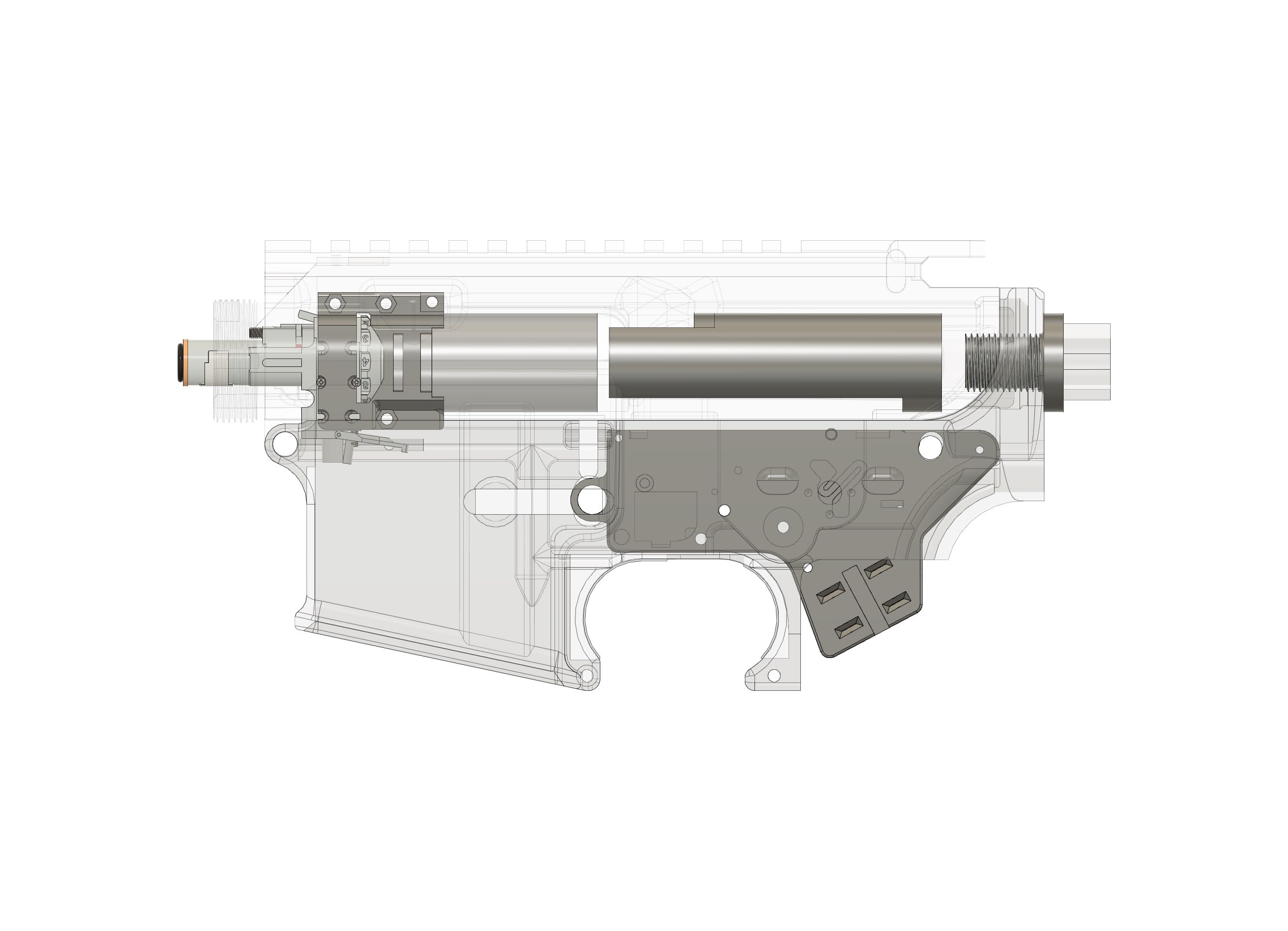
V1 is based on an intermediate clip that connects the hop-up and engine, plus a threaded rear cap that secures the assembly inside the upper. This is an efficient approach that reduces parts, simplifies installation, and allows for a clean HPA conversion without complex structure.
002
How it works
- The hop-up + engine assembly is joined using a clip
- The assembly slides into the upper
- A threaded rear cap provides pressure to hold everything in place
Strengths of V1
- Relatively quick installation
- Lower manufacturing cost
- Fewer parts and less volume
- Great option if you want a compact solution
Things to consider
- Requires more manual fine-tuning
- Final rigidity depends on adjustment and rear cap tension
- May require more experience for perfect setup on tighter tolerances
When it makes sense
V1 is ideal if you want a functional, compact HPA conversion with minimal hardware. It’s also a good option for users comfortable with manual tuning.
V2 Kit: more structure, more stability, better modularity
003
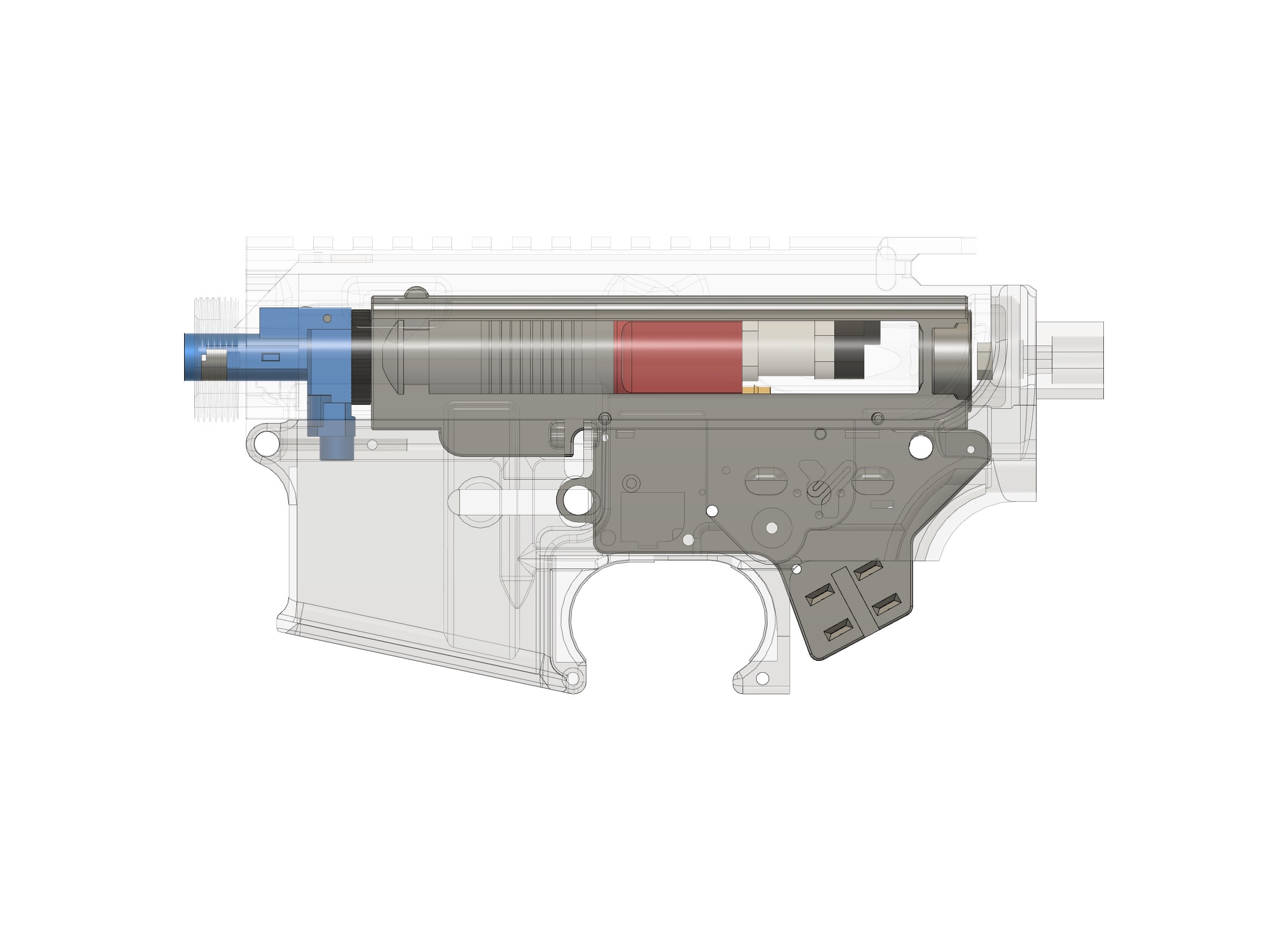
V2 changes the approach. Instead of relying mainly on the clip and rear closure, it uses a top clamp structure and a lower section compatible with ICS-style metal or printed lowers. The result is a more rigid “cage-like” system that firmly holds the hop-up and engine.
004
What it adds over V1
- Greater structural stability once assembled
- Better controlled tolerances
- Improved alignment with the rear body pin
- Better cable and air line management
- Cleaner separation between upper and lower
Real-world advantages
In heavy use, the key difference is not just durability, but consistent alignment over time. This results in a more solid feel and a cleaner, more reliable setup.
Trade-offs
- Slower assembly than V1
- Requires more inserts, screws, and hardware
- Better suited for long-term reliability than quick builds
Who it’s for
V2 makes sense if you play frequently, want a robust platform, and value a more serious and modular HPA setup.
V2.1 Kit: the refined evolution
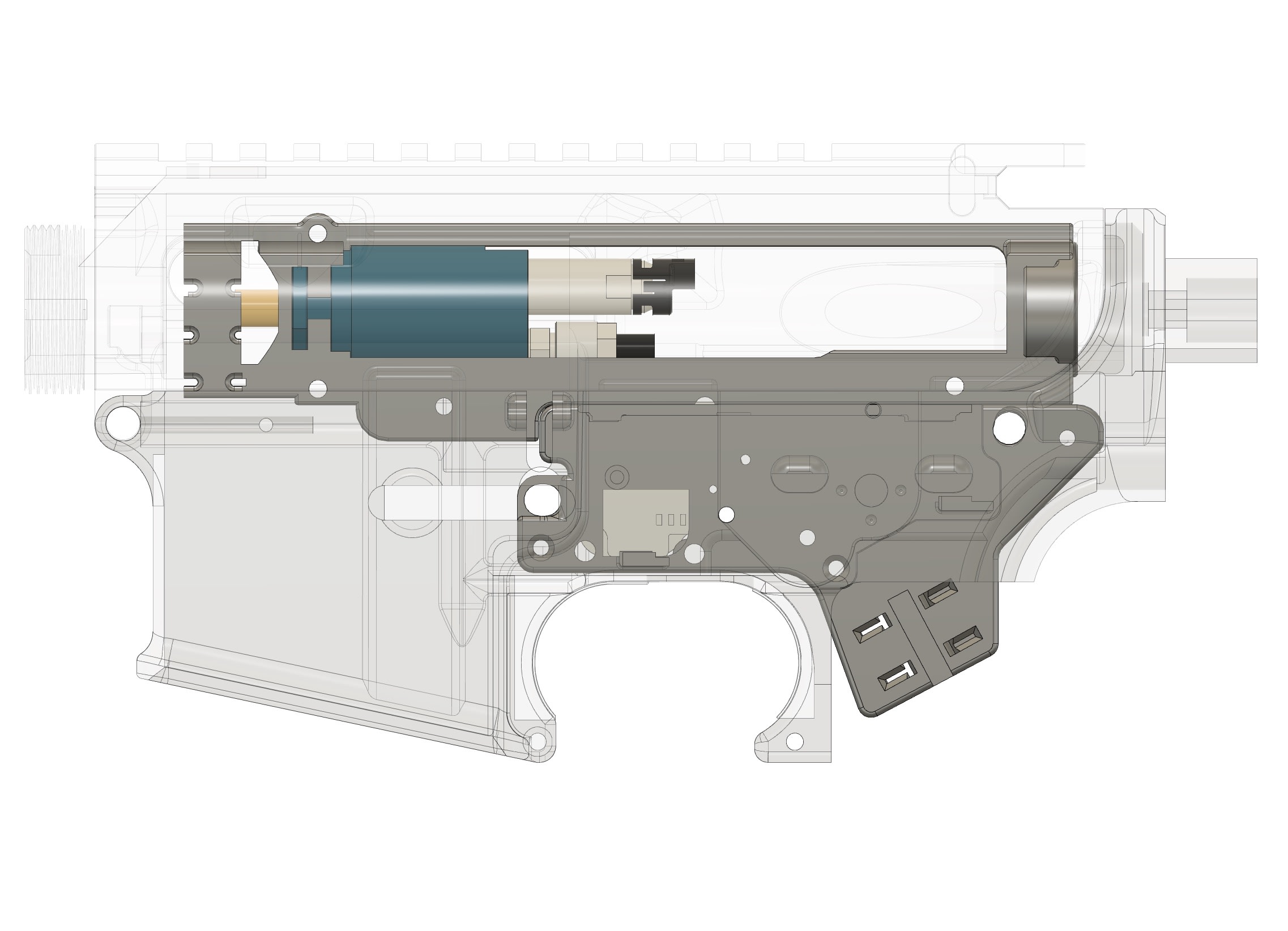
V2.1 builds on the V2 architecture, improving the areas that matter most in real use: reinforced walls, better engine grip, tighter tolerances, and more flexible air routing.
Key improvements
- Reinforced walls in critical areas
- Redesigned top clamp
- Better controlled internal tolerances
- More options for routing the air line (grip or stock)
What changes in practice
It’s not a revolution, but a clear refinement. V2.1 incorporates real-world feedback and improves durability, assembly comfort, and flexibility.
When to go straight for V2.1
005
- Starting from scratch and want the best version
- Looking for maximum rigidity in this system
- Prioritizing durability and configuration flexibility
006
Quick comparison
| Aspect | V1 | V2 | V2.1 |
|---|---|---|---|
| Philosophy | Compact and simple | Rigid cage structure | Refined V2 evolution |
| Ease of installation | Medium | Medium | Medium |
| Extra hardware | Low | Medium | Medium |
| Stability | Good | Very good | Excellent |
| Modularity | Low–medium | High | High |
| Air/cable management | Basic | Improved | More flexible |
| Ideal user | Simplicity-focused | Stability-focused | Wants the best version |
How to choose
Choose V1 if…
- you want a compact solution
- you prefer lower cost and complexity
- you’re comfortable with manual fine-tuning
Choose V2 if…
- you want a much more rigid setup
- you use your replica intensively
- you prefer a modular and consistent structure
Choose V2.1 if…
- you want the most refined version
- you value durability and improved tolerances
- you need flexibility in air routing
What to check before buying
Before choosing, confirm:
- Your exact replica platform
- The HPA engine you’ll use
- Desired air line routing
- The level of setup complexity you’re willing to handle
Quick FAQ
Does V2.1 replace V1?
No. V1 is still valid if you prioritize compactness and simplicity. V2.1 is better if you want a more robust and refined base.
Is V2 always better than V1?
Not necessarily. It’s more robust, but also more complex. If you want a simple and compact setup, V1 may still be the right choice.
Best option for heavy use?
V2 and especially V2.1 are better suited for intensive use and long-term stability. :contentReference[oaicite:0]{index=0}
Can I choose based only on photos?
Sometimes, but it’s better to consider platform, engine, and air routing to avoid mistakes.
Conclusion
The difference between V1, V2, and V2.1 is not marketing—it’s how the mounting system is solved.
V1 is compact and direct.
V2 improves rigidity and modularity.
V2.1 refines that concept into the most solid option in the lineup.
If you want a quick recommendation:
- simple setup → V1
- robust base → V2
- best overall version → V2.1
If you’re unsure, checking compatibility, engine, and air routing beforehand will save you a lot of time later.
Related products
Explore these designs from the same topic: